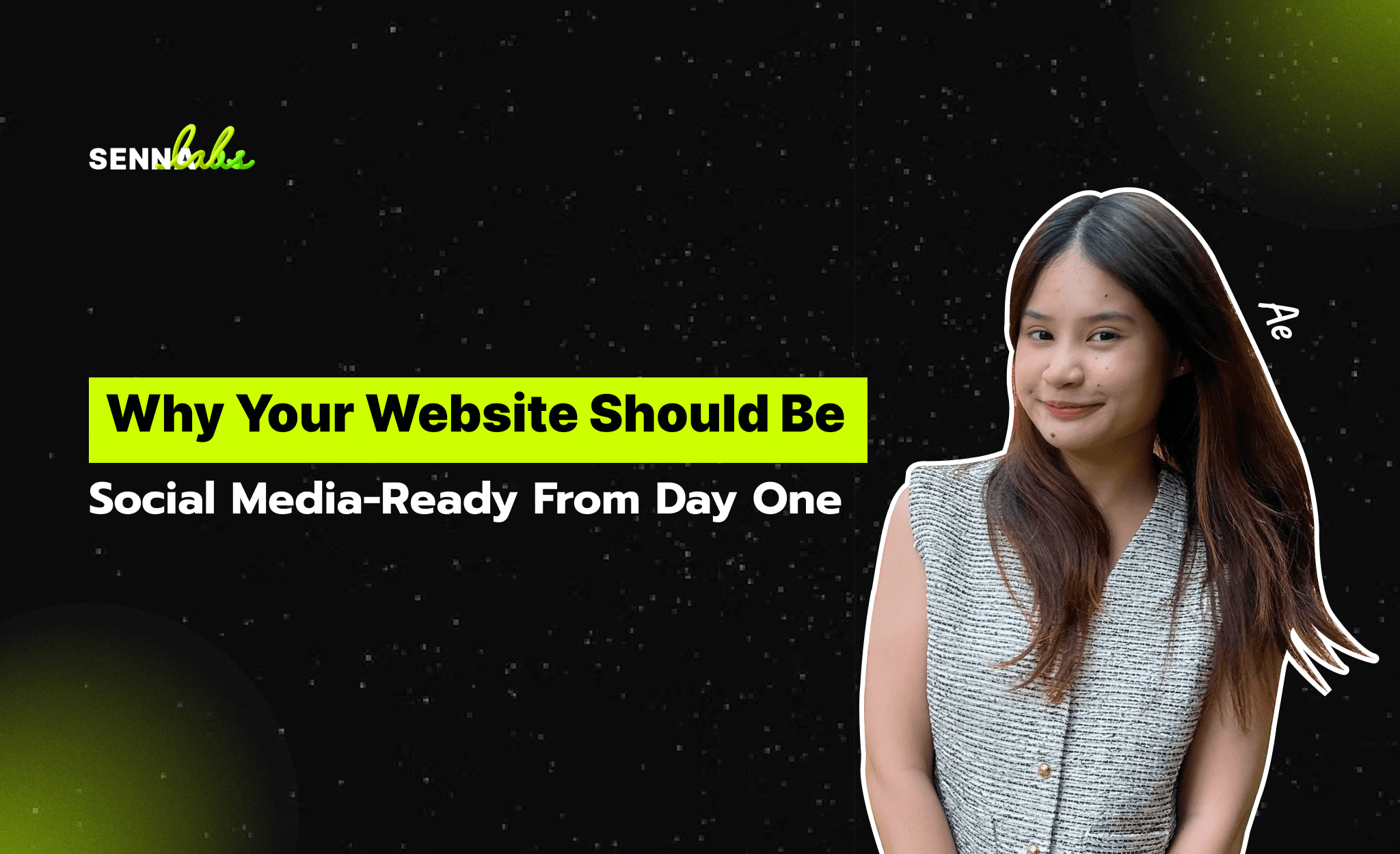
Why Your Website Should Be Social Media-Ready From Day One
Share
In today’s digital ecosystem, social media and websites are no longer separate entities. They’re part of the same customer journey. When someone discovers a brand on Facebook, views a product demo on Instagram, or watches a tutorial on TikTok, the natural next step is to visit the company’s website.
But here’s the critical point: If that website fails to reflect or support the social media experience, customers often disengage.
That’s why integrating social media with your website shouldn’t be an afterthought—it should be part of your foundation from day one. Whether you’re launching an e-commerce store, a personal brand, or a service-based business, making your site “social media-ready” builds trust, drives traffic, and increases conversions.
Let’s explore what this means in practice, the benefits you gain, and how one business used social integration to drive a 25% increase in online sales.
What Does “Social Media-Ready” Really Mean?
Being “social media-ready” means your website is designed to work with, not separately from, your social media channels. It involves:
-
Displaying content from your social feeds (Instagram, Facebook, TikTok, etc.)
-
Adding share buttons for easy reposting
-
Enabling social login options for users
-
Embedding real customer reviews and testimonials from social platforms
-
Tracking social engagement through tools like Facebook Pixel
-
Using visual and brand language consistent with your social presence
In essence, it’s about making sure visitors who come from social media feel like they’re entering a consistent, trustworthy, and interactive environment.
Why It Matters: The User Journey Has Changed
Traditionally, websites were the central destination of digital marketing. But now, for many users, the first touchpoint is social. They don’t start with Google—they start with their feed.
Social media is where:
-
People discover new brands and products
-
Customers interact with influencers and real users
-
Product reviews and experiences go viral
-
News and promotions are shared instantly
A disconnected website breaks that momentum. A well-integrated one builds on it.
Benefit 1: Real-Time Content Keeps Your Site Fresh
By embedding social feeds directly into your homepage or product pages, you’re adding a real-time content layer that updates automatically.
Examples include:
-
A live Instagram gallery showing your latest posts or user-generated content
-
A carousel of Facebook reviews or TikTok videos tagged with your brand hashtag
-
A Twitter feed for brand updates, events, or service status
This approach serves two purposes:
-
It signals to users that your brand is active, engaged, and current.
-
It reduces the pressure to manually update content on your site every week.
For smaller teams, this automation is a game changer.
Benefit 2: Trust Signals Drive Higher Conversions
Today’s consumers are skeptical. They read reviews, compare alternatives, and look for signs of social proof. Social media provides exactly that—but only if it’s visible at the right moment.
Integrating authentic reviews, photos, or tagged posts from real customers builds credibility. It demonstrates that people actually use and enjoy your product or service.
Consider this scenario:
A visitor lands on your product page and sees a 5-star review carousel pulled from Facebook, with real names and profile pictures. Below that, they see a live Instagram feed featuring customers wearing or using your product.
That’s far more convincing than a generic stock photo or a two-sentence “testimony” you wrote yourself.
Benefit 3: Better Engagement Across Channels
Your website can—and should—send traffic back to your social channels too. Adding:
-
Visible follow buttons
-
Embedded video previews
-
Incentives for sharing content
-
Prompts to join conversations via hashtags or challenges
...creates a cycle where website visitors become social followers and vice versa.
This circular strategy enhances long-term brand loyalty. When users engage with you across multiple platforms, your content stays top-of-mind and builds deeper relationships.
Benefit 4: Performance Tracking and Retargeting
When your website is linked with social media through tools like Facebook Pixel or TikTok Pixel, you gain access to a powerful data layer.
You can:
-
Track how users from Instagram behave once they land on your site
-
Build retargeting campaigns for users who viewed a product but didn’t buy
-
Create lookalike audiences based on your best customers
-
Measure conversions directly attributed to social media
This kind of insight turns your website into more than a digital brochure—it becomes an intelligent, performance-driven engine for your marketing efforts.
Case Study: Real Impact from Simple Integration
A boutique fashion brand built its website with social media in mind from day one. Instead of creating isolated product pages, they:
-
Embedded live Facebook reviews on every product
-
Added an Instagram hashtag feed showing customers wearing their clothes
-
Offered discounts for users who shared their purchase on social media
-
Installed Facebook Pixel to track campaign performance and retarget visitors
They didn’t have a massive ad budget or a large team. But they created a seamless customer experience that connected discovery (on social) with conversion (on the site).
The result? A 25% increase in online sales within 3 months—without increasing ad spend.
Customers reported higher confidence in products because of the visible, real-world endorsements. Social traffic converted better because users felt a consistent brand presence across channels.
Final Thoughts: Integration Builds Trust and Momentum
Your social media and your website should not be competing for attention—they should be working together. When a customer moves from your Instagram story to your website, they shouldn’t feel like they’re landing in a different universe. They should feel like they’ve just walked into your digital storefront.
Integrating social media with your website:
-
Improves trust and social proof
-
Keeps your content dynamic and current
-
Boosts conversion through familiarity and credibility
-
Supports retargeting and performance marketing
-
Strengthens your brand across every stage of the user journey
And most importantly, it reflects the way people explore and decide today—not the way they did five years ago.

Share

Keep me postedto follow product news, latest in technology, solutions, and updates
Related articles
Explore all