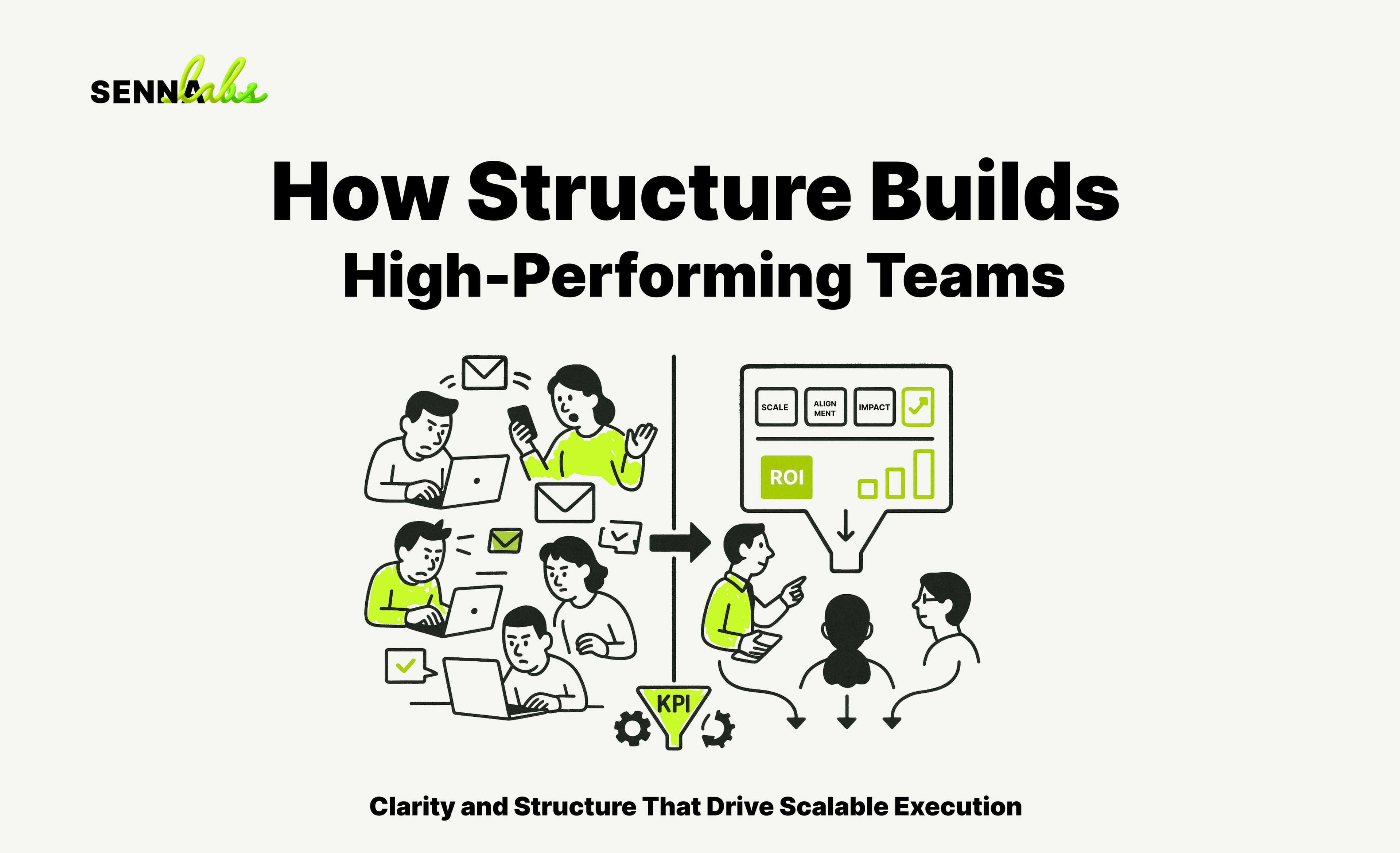
How Structure Builds High-Performing Teams

Business
2 mins read
2 mins read

Published

27 August, 2025

Language

English

Written by

Share

How Structure Builds High-Performing Teams

The Real Problem Isn’t Execution — It’s Lack of Structure

Everyone wants faster execution.

But most teams try to force it by working longer, pushing harder, and adding more tools.

It doesn’t work.

Because execution isn’t about effort — it’s about systems.

Story Pin image

1. Focused Scope, Not Just Speed

Doing more doesn’t mean delivering value.

The best software teams design for finish lines, not busywork.

They define:

  • What done looks like (per sprint or cycle)

  • What should not get pulled in

  • What’s driving the sprint: client goal, release plan, or internal milestone?

Tools like issue boards or scope planners help — but only if used to protect focus, not track noise.


2. Visibility That Doesn’t Depend on Updates

Weekly standups, status reports, Slack threads… they’re not scalable.

High-performing teams build passive visibility into their stack:

  • Status fields update based on real progress

  • GitHub or project management tools actions feed client dashboards

  • Slack integrations show what’s shipped without needing a meeting

Execution improves when updates happen by doing the work — not reporting it.


3. Ownership Embedded in the Stack

If ownership lives in people’s heads, you’ll always need a meeting to know who’s doing what.

We embed ownership into the systems themselves:

  • Ticket owners are visible at every layer

  • Dashboards show responsible leads per module or stream

  • Blockers trigger auto-escalation or reminders, not just silence

This kind of ownership is what scales execution — especially across dev, QA, design, and client teams.


4. Learning Loops, Not Just Delivery

Execution is more than delivery — it’s also discovery and course correction.

Smart teams:

  • Run retros every 1–2 weeks (but keep it lean)

  • Build in qualitative feedback checkpoints (not just bug reports)

  • Create space to reflect: What slowed us down? What created friction? What can we automate?

We help clients design internal systems for this — sometimes with custom dashboards, sometimes with simple Airtable automations or Notion workflows.

Conclusion: Execution Is About Operating Rhythm

The best execution doesn’t feel rushed. It feels structured, clean, and confidently paced.

And it shows up in the software — not just in the meetings.

If your team is working hard but not making meaningful progress, it’s not a capacity problem.

It’s a systems problem.
Written by
Opal Piyaporn Kijtikhun

Share

Keep me posted
to follow product news, latest in technology, solutions, and updates

More than 120,000 people/day  visit to read our blogs

Related articles

Explore all

Inbound Marketing การตลาดแห่งการดึงดูด
การทำการตลาดในปัจจุบันมีรูปแบบที่เปลี่ยนไปจากเดิมมากเพราะวิธีที่ได้ผลลัพธ์ที่ดีในอดีตไม่ได้แปลว่าจะได้ผลลัพธ์ที่ดีในอนาคตด้วยเสมอไปประกอบการแข่งขันที่สูงขึ้นเรื่อยๆทำให้นักการตลาดต้องมีการปรับรูปแบบการทำการตลาดในการสร้างแรงดึงดูดผู้คนและคอยส่งมอบคุณค่าเพื่อให้เข้าถึงและสื่อสารกับกลุ่มเป้าหมายได้อย่างมีประสิทธิภาพ Inbound Marketing คืออะไร Inbound Marketing คือ การทำการตลาดผ่าน Content ต่างๆ เพื่อดึงดูดกลุ่มเป้าหมายเข้ามา และตอบสนองความต้องการของลูกค้า โดยอาจจะทำผ่านเว็บไซต์ หรือผ่านสื่อ Social Media ต่าง ๆ ซึ่งในปัจจุบันนั้น Inbound Marketing เป็นที่นิยมมากขึ้นเพราะเครื่องมือและเทคโนโลยีที่พัฒนาขึ้นมาในปัจจุบันทำให้การทำการตลาดแบบ Inbound Marketing นั้นทำง่ายกว่าเมื่อก่อนมาก นอกจากนี้การทำ Inbound Marketing ยังช่วยสร้างความสัมพันธ์และความน่าเชื่อถือให้กับธุรกิจได้เป็นอย่างดีอีกด้วย หลักการของ Inbound Marketing Attract สร้าง
02 Apr, 2026

by

How Senna Labs helped S&P Food transform their online e-commerce business
S&P Food’s yearly revenues were 435 mils $USD. 10% of the revenue was from online sales. The board of directors felt that online sales should account for more. The digital
02 Apr, 2026

by

การเปลี่ยนทิศทางผลิตภัณฑ์หรือแผนธุรกิจ Startup หรือ Pivot or Preserve
อีกหนึ่งบททดสอบสำหรับการทำ Lean Startup ก็คือ Pivot หรือ Preserve ซึ่งหมายถึง การออกแบบหรือทดสอบสมมติฐานของผลิตภัณฑ์หรือแผนธุรกิจใหม่หลังจากที่แผนเดิมไม่ได้ผลลัพธ์อย่างที่คาดคิด จึงต้องเปลี่ยนทิศทางเพื่อให้ตอบโจทย์ความต้องการของผู้ใช้ให้มากที่สุด ตัวอย่างการทำ Pivot ตอนแรก Groupon เป็น Online Activism Platform คือแพลตฟอร์มที่มีไว้เพื่อสร้างแคมเปญรณรงค์หรือการเปลี่ยนแปลงบางอย่างในสังคม ซึ่งตอนแรกแทบจะไม่มีคนเข้ามาใช้งานเลย และแล้วผู้ก่อตั้ง Groupon ก็ได้เกิดไอเดียทำบล็อกขึ้นในเว็บไซต์โดยลองโพสต์คูปองโปรโมชั่นพิซซ่า หลังจากนั้น ก็มีคนสนใจมากขึ้นเรื่อยๆ ทำให้เขาคิดใหม่และเปลี่ยนทิศทางหรือ Pivot จากกลุ่มลูกค้าเดิมเป็นกลุ่มลูกค้าจริง Pivot ถูกแบ่งออกเป็น 8 ประเภท Customer Need
02 Apr, 2026

by

Contact Senna Labs at :

hello@sennalabs.com28/11 Soi Ruamrudee, Lumphini, Pathumwan, Bangkok 10330+66 62 389 4599
© 2022 Senna Labs Co., Ltd.All rights reserved. | Privacy policy